
07/06/2025
Theo: Vietnam.vn
Traffic jams are no longer a 'hopeless' problem as traffic lights can now 'think', helping us travel more conveniently every day.
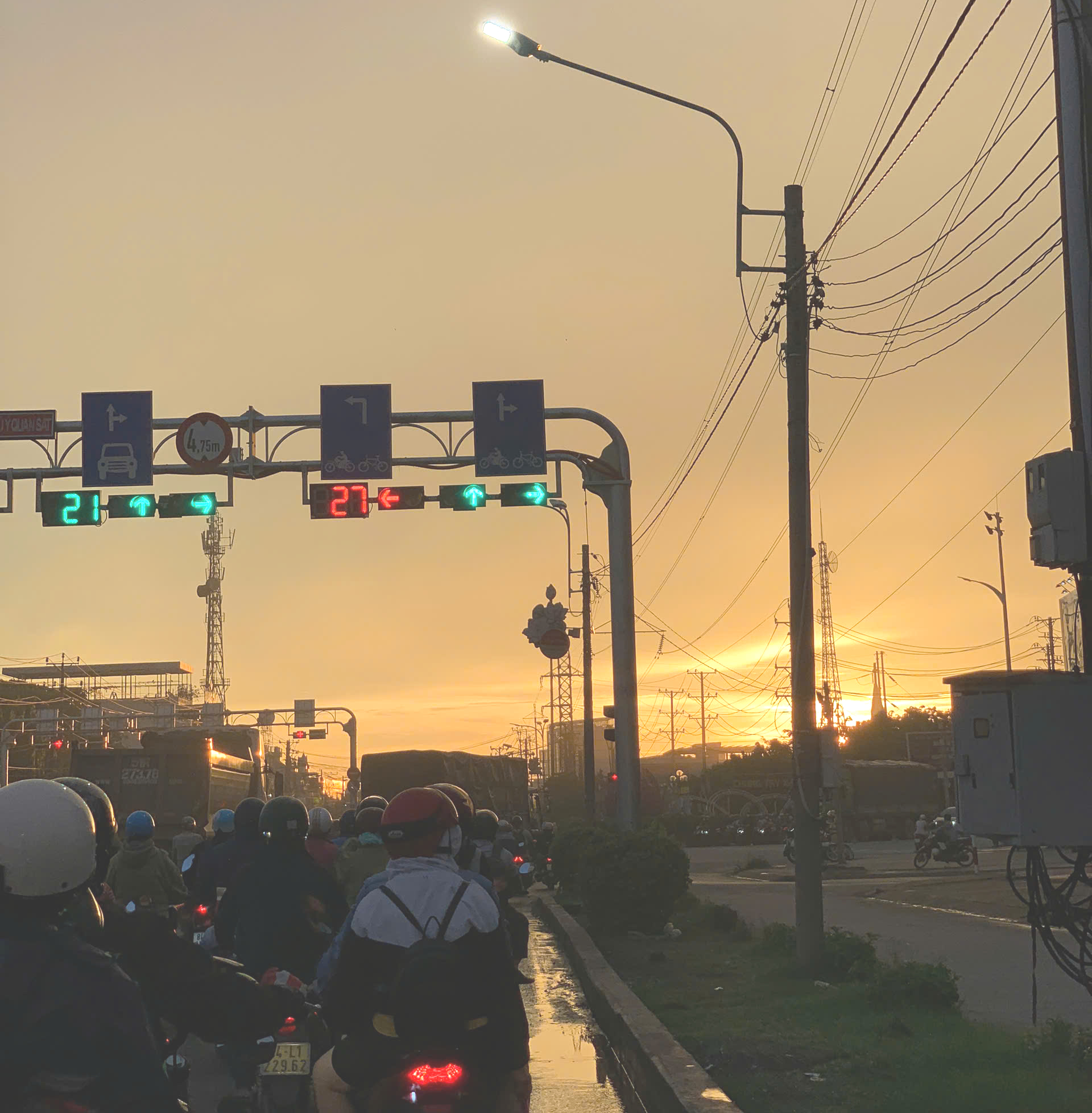
Smart traffic lights are systems that integrate sensors, cameras, real-time data, and AI technology to adjust the light cycle flexibly, based on traffic density rather than fixed times.
In Ho Chi Minh City, AI technology has been tested to coordinate traffic lights at several hotspots such as the Nguyen Gia Tri - D5 intersection, the Ung Van Khiem - Nguyen Gia Tri intersection, the Hang Xanh intersection, and the five-way intersection near the War Memorial.
According to the Ho Chi Minh City Department of Transportation, traffic conditions in these areas have become more stable after the implementation of the smart traffic light system.
Meanwhile, Hanoi is also pioneering the application of smart traffic lights on routes such as Giang Vo - De La Thanh, Nguyen Trai - Truong Chinh, and Lang Ha - Thai Ha.
Traffic flow data is continuously updated to the control center for AI analysis, allowing for more flexible traffic light coordination.
The key advantage of AI over traditional traffic light systems is its ability to learn and predict. Instead of adjusting lights hourly as in the old method, AI will adjust based on real-world conditions: if there is a minor accident or heavy rain causing traffic to shift in a different direction today, the system will adapt immediately.
For example, if the system detects that lane A has more than 50 vehicles waiting at a red light, while lane B only has 7 vehicles, it will automatically extend the green light for lane A, helping to reduce local congestion. This happens in an instant, without waiting for the control center to intervene.
Ms. Vu Thi Hanh (a ride-hailing driver in Ho Chi Minh City) shared: "I frequently travel along Vo Van Kiet road near the Thu Thiem tunnel. Previously, this section was often congested due to trucks and motorbikes mixed together, but now with the smart traffic lights prioritizing the direction of heavy traffic, the congestion has noticeably decreased."
In areas equipped with smart traffic lights, traffic flow has increased significantly, and waiting times at traffic lights have been noticeably shortened during peak hours. AI adjusts traffic lights dynamically according to actual traffic volume, reducing waiting times and minimizing congestion, thereby significantly improving people's journeys.
In addition, people also rely on data and alerts from smart traffic light systems combined with map applications such as Google Maps, ZaloMap, or Grab to choose efficient routes and avoid frequently congested areas.
Traffic habits are also gradually changing, from 'following familiar routes' to trusting real-time data and instantly adjusting routes to suit changing traffic conditions.
These improvements not only help reduce stress while commuting but also save fuel, reduce emissions, and contribute to a better quality of life and environmental protection.
Smart transportation is more than just installing smart lights. It's a whole urban vision where data is connected, analyzed, and used to make accurate and effective management decisions.
AI will not replace humans, but it will help humans manage traffic in a more timely, objective, and flexible manner.
And who knows, maybe one day you won't be annoyed anymore by the question, 'Why is the red light taking so long?'
Theo: Vietnam.vn


20/09/2024
Theo: THƯ VIỆN PHÁP LUẬT


